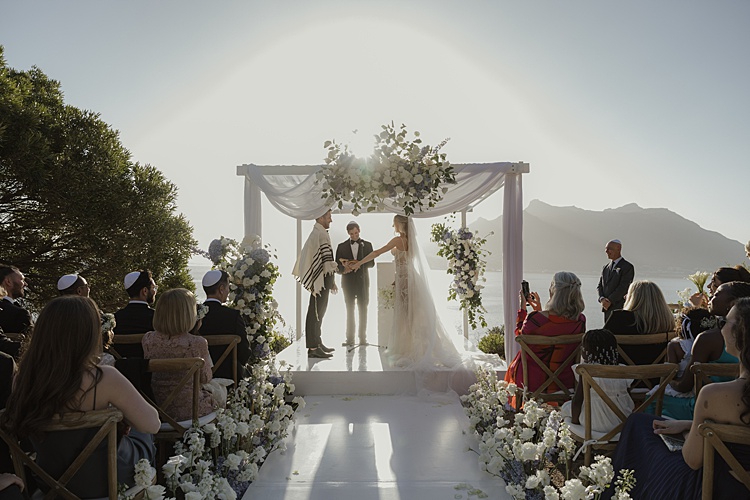
Camila and Ben‘s Jewish wedding | Photo by Nikki van Diermen
One of the most beautiful things about Jewish weddings is how rich they are in ritual. There’s so much meaning and so many centuries of tradition behind just about every step of the day, and there’s something so special about that.
There’s no denying, though, that there’s a lot of lingo to wrap your head around if you’re new to the Jewish wedding world (or even if you’re not!).
That’s why we created our ultimate Jewish wedding glossary. Whether you’re planning your own Jewish wedding or attending your first one as a guest, we’ll take you from aufruf to yichud in no time flat.

Sophie and Jonny‘s Jewish wedding | Photo by Liam Collard Photography
AUFRUF: A short ceremony during the Shabbat synagogue service that normally takes place on the Saturday morning before the wedding. The groom (and sometimes the bride) are honoured in front of their community. This is often followed by a small party or lunch.
ARAMAIC: A semitic language related to Hebrew. The traditional ketubah text is in Aramaic.
ASHKENAZI: Jews of Eastern and Central European descent.
BADEKEN: A short but meaningful ceremony where the groom covers the bride’s face with her veil. It occurs just before the actual wedding ceremony and is a custom that derives from the biblical account of Jacob’s first marriage, when he was deceived into marrying the heavily veiled Leah instead of Rachel, his intended bride. The badeken is often emotionally charged as the bride and groom may not have seen each other for 24 hours or longer (as much as 7 days) until this moment.

Jade and Adam‘s badeken | Photo by Milda Vasile Photography
BENCHERS / BENCHING: A small booklet containing the Jewish blessings for a meal. Couples will often make personalized benchers for all of their guests to use and then take home as a souvenir.

Shera and Jared‘s benchers by Oy Vey Studios | Photo by Devon Shoob
BIRKAT HAMAZON: Jewish blessings recited after a meal – known in English as Grace after Meals.
CHATAN: Hebrew word for groom. It comes from the verb meaning to tie, connect or covenant.
CHAZAN: A cantor – often a trained musician – who plays an active role in the ceremony in prayers said as songs.
CHALLAH: Delicious sweet plaited bread eaten on Shabbat and at celebrations (a bit like a brioche – absolutely scrumptious toasted with a little butter).

Lauren and Ben‘s wedding challah | Photo by Natalie J Weddings
CHUPPAH: The wedding canopy under which a Jewish couple marries, representing the couple’s future home (pronounced more like hoop-a, less like chew-pa).

Gaby and Brad‘s chuppah | Photo by Gingerbeard Wedding
HA MOTZI: A Jewish blessing recited over bread.
HAVA NAGILA: A traditional Hebrew folk song played at Jewish weddings (and THE absolute staple of Jewish wedding bands).
HENNA: A plant dye used to stain the skin. In some Sephardi and Mizrahi traditions, henna parties are held for the bride and groom in the week before the wedding. During the henna party, the oldest member of the family smudges henna on the palms of the bride and groom’s hands with the intention of bestowing upon the couple elements of a happy life, and sweets and gold are paraded around the couple as symbols of luck and happiness for the newlyweds.

Nicole and Jordan‘s henna party | Photo by Swiger Photography
HORA: Celebratory circle dance in which the bride and groom are lifted up on chairs.

Hora at Stephanie and Dan‘s wedding | Photo by David Bastianoni
KABBALAT PANIM: A pre-nuptial reception in honor of the bride and groom shortly before the chuppah ceremony. The groom’s tisch is part of the kabbalat panim.
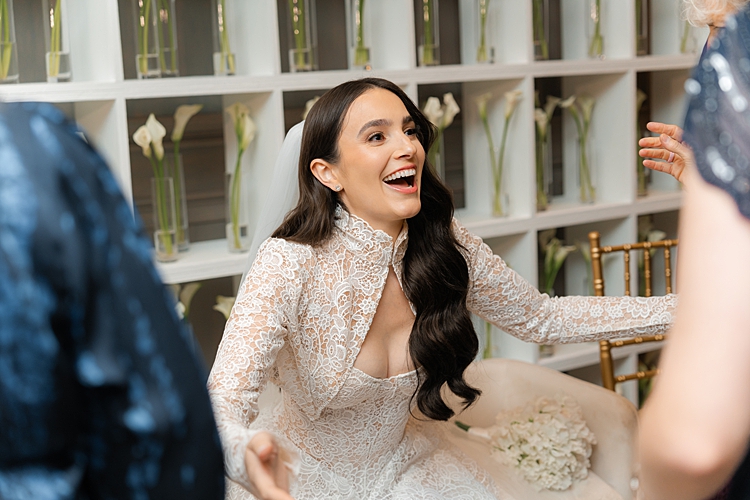
The kabbalat panim at Sydney and Chaim‘s wedding | Photo by Alex Knight Studio
KALLAH: Hebrew word for “bride.”
KASHRUT: Jewish dietary law.
KETUBAH: The Jewish marriage contract, often beautifully illustrated. The traditional text provides for a money settlement payable to the wife in the event of divorce or at the husband’s death (how romantic, right?), although these days lots of couples opt for contemporary versions that speak to their 21st-century relationships – or write their own custom text!
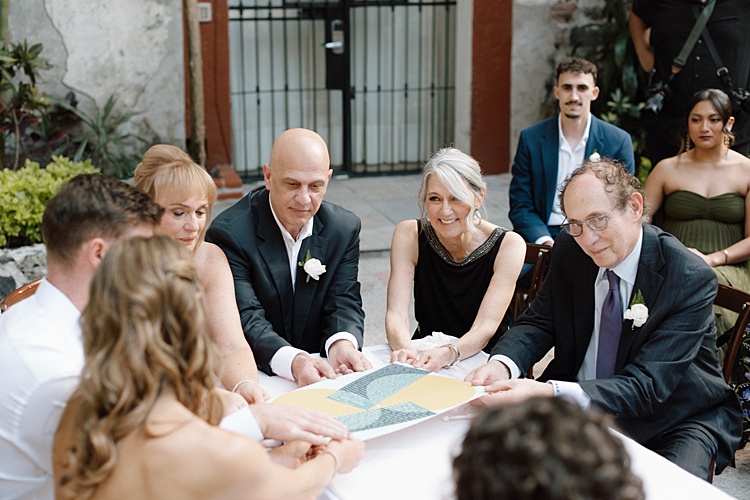
Alana and TJ‘s ketubah by Tchotchke | Photo by Efege Photography
KIDDUSH: The traditional Jewish blessing recited over wine on Shabbat, holidays, and at Jewish weddings.

Kiddush at Benji and Chris‘s wedding | Photo by Liam Smith
KIDDUSH CUP: The Jewish wine glass or goblet which is used on Shabbat, Jewish holiday meals, and under the chuppah. It’s often an heirloom that has been passed down through the generations, but any cup can function as a kiddush cup if necessary.
KIPPAH / KIPPOT Head coverings for men. Alternative words are “yarmulkas” or “cupples.” Many couples opt to hand out personalized kippot in their wedding colors for guests to wear on the day – and take home as a souvenir that will linger in the back corner of a drawer forever after.

Kippah from Justine and Elliott‘s wedding | Photo by Kate Swerdlow
KITTEL: A white linen robe worn by male Jews in some Ashkenazi communities on special occasions to signify purity, holiness and new beginnings. Traditionally, a Jewish man first wears a kittel on his wedding day, thereafter on Rosh Hashanah, Yom Kippur and Passover, and ultimately as a burial shroud. Most often seen in Orthodox weddings, though not all Orthodox grooms will wear one.

Groom in a kittel at Ranana and Binyamin‘s wedding | Photo by Eliana Melmed Photography
KLEZMER: Traditional Yiddish celebratory music often danced to at Jewish weddings (heavy on the clarinet).
KOSHER: Food that meets Jewish dietary restrictions. Pork, shellfish, and meat and dairy served together are all off the menu. Kosher certified food is supervised by an agency, whereas “kosher style” food avoids the above-listed ingredients and combinations.
MAZAL TOV: Exclamation meaning “Good Luck / Woo Hoo / Fantastic news!”
MECHITZA: A partition used to separate men and women during the dancing in some Orthodox Jewish weddings.

Mechitza at Adina and Maurice‘s wedding | Photo by Jossef Si
MIKVAH: A ritual bath that Orthodox Jewish brides-to-be visit shortly before their wedding day. It’s increasingly popular for non-Orthodox brides to opt to go to the mikvah pre-wedding too, and we hear so many rave reviews about how meaningful an experience it can be.
MITZVAH: A commandment from the Torah, and/or a good deed.
MIZRAHI: Jews of Middle Eastern descent.
SHTICK: At Orthodox weddings, “shtick” is when, during the reception, wedding guests entertain the newlyweds through dancing, costumes, juggling, and silliness.

Shtick at Ellie and David‘s wedding | Photo by Herschel Gutman
SEPHARDI: Jews of Spanish, Portuguese, and North African descent.
SHABBAT: The Jewish Sabbath, beginning Friday at sundown and ending Saturday at sundown.
SHEVA BRACHOT: The seven marriage blessings recited under the chuppah, also known in Hebrew as “birkot nissuin.”
SIMCHA: A Jewish party or celebration.
TALLIT / TALLIS / TALIT / TALIS: A prayer shawl – often white in color with fringed corners – worn over the head and shoulders by Jewish males during religious services. Lots of Jewish grooms opt to wear a tallit under the chuppah – and it’s not uncommon to use a family heirloom tallit as the canopy for the chuppah.

Groom in a tallit at Emily and Louis‘s wedding | Photo by James Mason
TISCH: Yiddish for “table,” it’s a light-hearted discussion surrounding the groom held before the wedding ceremony that’s more commonly seen in Orthodox weddings. Traditionally, the tish is an all-male affair, but these days some couples hold egalitarian tisches where both members of the couple are regaled by friends and family regardless of gender.
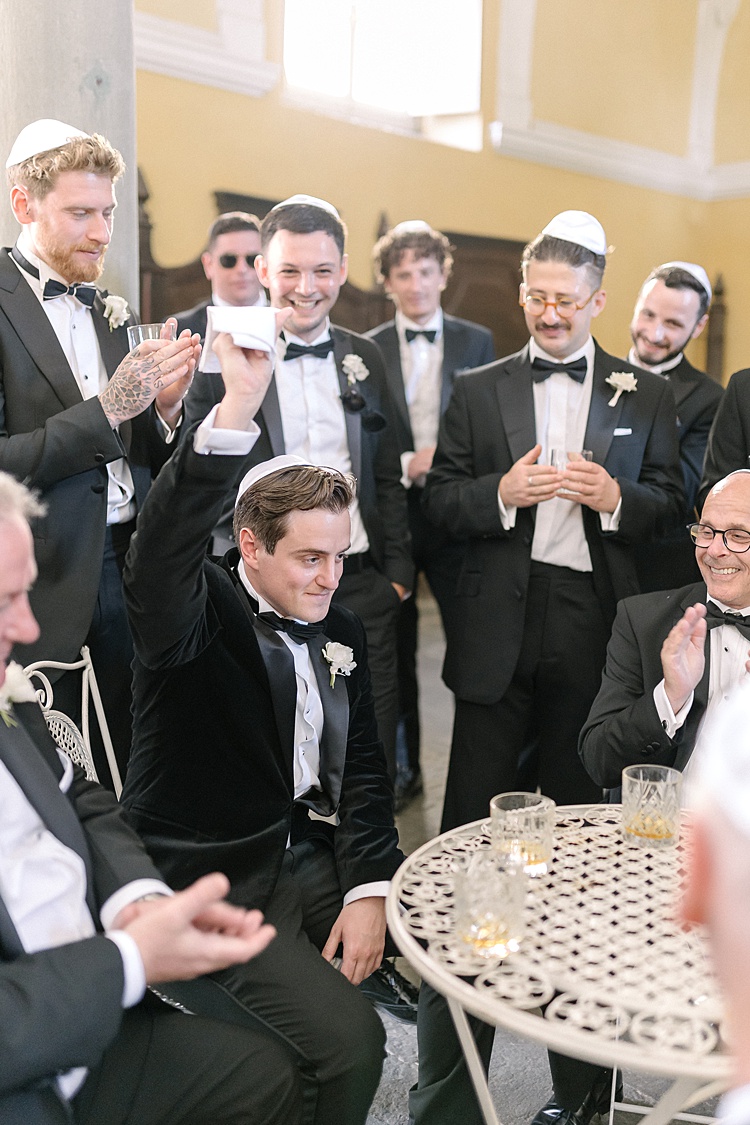
Tisch at Katie and Jamie‘s wedding | Photo by Alessandro Colle
TORAH: The first five books of the Hebrew Bible.
YICHUD: The brief seclusion of bride and groom immediately following the wedding ceremony. So many couples say this is one of the best and most meaningful parts of the day, as it gives you and your newly minted spouse some precious alone time together to sit back and take it all in on an otherwise jam-packed day!

A peek into the yichud at Karen & Jeremy’s wedding | Photo by Earthy Photography
Have we missed anything out? Let us know in the comments!

Leave a Reply