• About
  • Find a Vendor
  • Submit
  • Advertise
  • Brides Club
  • Your Jewish Life
  • Contact

Smashing the Glass | Jewish Wedding Blog

Inspired Jewish Weddings

  • Real Jewish Weddings
    • City Chic
    • Fashion Forward
    • Outdoor
    • Destination
      • Israel
      • Italy
      • Spain
      • France
      • Beach Weddings
    • Super Luxe
    • Budget
    • DIY
    • Same Sex
  • Jew-ish Weddings
    • Real Jew-ish Weddings
    • Jewish-Catholic Weddings
    • Jewish-Chinese Weddings
    • Jewish-Christian Weddings
    • Jewish-Greek Weddings
    • Jewish-Hindu Weddings
    • Jewish-Humanist Weddings
    • Jewish-Irish Weddings
    • Jewish Japanese Weddings
    • Jewish-Muslim Weddings
    • Same Sex Jew-ish Weddings
  • Inspiration + Guidance
    • Engaged? Start Here
    • Ceremony
      • Chuppah ideas
      • Jewish ceremony music
      • Jewish wedding ceremony 101
      • Jewish ceremony traditions
      • Ketubah Ideas
      • Jewish wedding legalities
      • Jew-ish ceremony ideas
    • Reception
      • Music
      • Speeches
      • Entertainment
      • Venues
    • Food & Drink
      • Kosher catering
      • Wedding cakes
      • Drinks
    • Decor
      • Decorations
      • Favours
      • Floristry
      • Guestbooks
      • Stationery
    • Style
      • Brides dresses
      • Shoes & accessories
      • Grooms
      • Bridesmaids
    • Advice
      • Converting to Judaism
      • Real blogging brides
      • Dear Karen…
    • Honeymoons
    • STG Live
    • Five Minutes With
    • Wedding Must-Haves
    • Wedding Consultancy
  • Jewish Brides Club
  • Find a Wedding Vendor
Home > guest post

The 17 Things Nobody Tells You About Planning a Destination Wedding

25/03/2026 by Karen Cinnamon Leave a Comment

Claudia & James, Royal Myconian Hotel, Mykonos, Greece

Claudia and James‘s Jewish wedding in Mykonos | Photo by Anna Roussos

This is a guest post by Michelle Jacobs. The founder of Elegante by Michelle J, Michelle  is a wedding planner with a niche specialisation in luxury destination weddings in Europe  for UK and US based Jewish couples. Her mission is to create magical and memorable weddings for her couples, their families and their guests. Michelle has had the privilege of working at numerous European venues and has built fantastic relationships and effective collaborations with a whole host of talented and professional wedding vendors. She is passionate about sharing all of her knowledge and experience to create your dream wedding.


As destination wedding specialists, we are firmly on ‘team travel’ –  nothing beats the opportunity to bring your loved ones together in a beautiful place for quality time together. Planning a destination wedding gives your guests an immersive occasion that everybody present will have in common for the rest of their lives. That is why we plan with memorable moments in mind, and why we’re not surprised that more and more couples are considering marrying abroad. It is, however, a decision you should go into with your eyes open – so these are the 17 things nobody tells you about planning a destination wedding.

Chhaya and Harry, ME Sitges Terramar Hotel, Barcelona, Spain

Chhaya and Harry‘s Hindu-Jewish Wedding in Spain | Photo by Dmitry Komarenko

Start by setting your expectations about who will come to your destination wedding

One thing I always tell my couples is that you can’t expect everyone on your guest list to be as excited about your destination wedding as you are. Inviting someone to drive half an hour down the road to a wedding in your hometown is not a huge ask, whereas inviting them to travel to a different country, incur the expense of getting and staying there, and take several days out of their lives is.

We advise our couples to try not to be disappointed if guests that you had expected to attend choose not to. Even if you think ‘they can afford it, we don’t know why they’ve said no’, everyone has different priorities for where they spend their money and time.

On the plus side, your guest numbers are likely to end up smaller which means your budget stretches further. You will also end up with people who really matter at your wedding, while those on the periphery of your lives are likely to politely decline.

Natalie-and-Marc-Villa-MIani-Rome-Italy

Natalie and Marc‘s Jewish Wedding in Rome |  Photo by Alex Wysocki 

Think about your VIP guests and whether they can travel

With all of that said, it is important to think about anyone important to you that might not be able to make the trip if you’re planning a destination wedding. A great example of this is when couples have elderly grandparents, and we do have some couples who choose to stay closer to home to ensure they can attend.

We have other couples who go ahead with their destination wedding, but then make sure their grandparents are included in other ways – making more out of the civil ceremony that happens at home, prior to the overseas celebration, for example and / or the aufruf.

Jewish wedding Great Synagogue of Florence and Villa di Maiano, Florence, Italy_0075

Paige and Richard‘s Jewish Wedding in Florence | Photo by David Bastianoni

You need to really look after your guests

Having established that everyone who attends will spend a significant amount of money and time, we advise making everything as effortless for your guests as possible.

We want everyone to feel excited, relaxed, and completely looked after. This is a priority in the destination wedding planning service we offer. As well as designing, planning and producing your wedding, we look after you and your nearest and dearest. All of our couples get complimentary access to our premium travel concierge service, Terrazza Travel, a dedicated team that makes booking their flights, hotels, transfers and cars easier than finding the perfect outfit for your wedding.
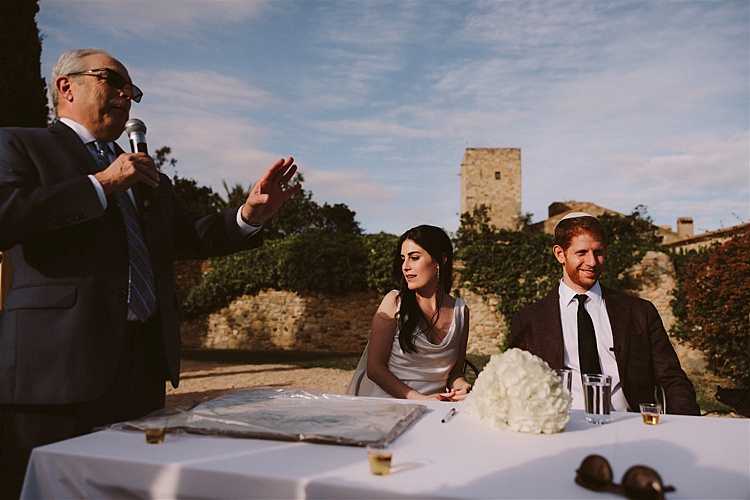
Talia and Nadav‘s Jewish Wedding in Spain |  Photo by People True Love Tellers

This is why it’s so important to choose your location carefully

When you decide where to get married, choose a location that’s easy for your guests to get to. Major airport hubs are a big advantage, as are areas with a range of different hotel types. If you’ve fallen in love with a venue in the middle of nowhere, we’re not saying you shouldn’t get married there. You just need to consider other ways to make things easier for your guests.

A great example is couple Talia and Nadav, who chose a beautiful venue two hours outside of Barcelona. Rather than asking their guests (many of whom were coming from the US) to travel another two hours after a long travel day, we hosted a welcome celebration in Barcelona on night 1. Welcome drinks and snacks followed a tour of the Gaudi La Pedrera, giving everyone a chance to decompress before the arranged coach to the wedding location the following day.

Aviva and Alan, Villa di Maiano, Fiesole, Italy

Aviva and Alan‘s Jewish Wedding in Tuscany | Photo by David Bastianoni 

How should you choose your destination wedding location?

Some couples come to us for planning a destination wedding and they already know where it’s going to be – somewhere meaningful, perhaps somewhere they’ve holidayed a lot, where the proposal happened, or where there’s a family connection (like Emily and Avery whose welcome party took place at her grandfather’s house in Portugal!).

Other couples know they want the destination wedding experience, but don’t have a particular place in mind. That makes it much harder to decide. If there is no meaningful connection to anywhere, you have the whole of Europe to choose from and it’s like looking for a dropped engagement ring on a sandy beach…

Of course, if you’re working with an experienced destination wedding planner, either of these two approaches works. As experts in Mediterranean Europe weddings, we can work with you to find the perfect place to bring your loved ones together – meaningful connection or no.
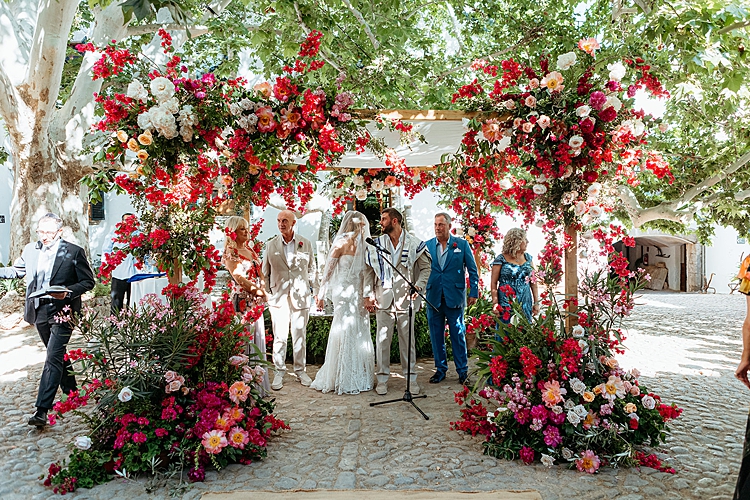
Katie and Tom‘s Jewish Wedding in Spain | Photo by Violeta Minnick 

Should you work with a local planner or one from your home country?

While there are wonderful wedding planners in all European countries, our advice would be to work with someone in your home country who specialises in destination weddings – like us.

Some of the benefits of working with Elegante by Michelle J are:

  • We work in your language
  • We know how to plan your wedding overseas remotely, with strategic planning trips to be ‘on the ground’ when necessary
  • We also provide a travel concierge service

These are all things you may not get with a local planner in your host country. We recommend speaking to planners in both categories before making your decision. All too often we pick up weddings partway through the planning journey, where couples have first gone to a local planner and it hasn’t worked out for whatever reason – this can involve a lot of unravelling, which costs you more in the long term.

If you’re concerned about your planner being able to speak the language in your destination country, Elegante by Michelle J gives you the best of both worlds. We are based in the UK and are an English-speaking team, however we always have a planner with us who speaks the local language. In Italy, we have a permanent member of the team available to assist us at all times.

Explore destination weddings in Europe with Elegante by Michelle J.

Aviva and Alan, Villa di Maiano, Fiesole, Italy

Aviva and Alan‘s Jewish Wedding in Tuscany | Photo by David Bastianoni 

Destination weddings aren’t automatically cheaper

Many couples planning a destination wedding assume it will be cheaper – perhaps because they realise they will have fewer guests, or because of the misconception that weddings in Italy or Spain or Portugal just cost less than in the UK or US. This isn’t necessarily true.

Certain things might be less expensive: for example, if you choose a rural venue in the middle of nowhere the hire may well cost you less than a wedding at The Savoy in London, but you must factor in the costs of getting guests there on coaches, hiring in furniture, bringing in a production team and so on.

Don’t assume a destination wedding will be cheaper, and if this is your main motivation for going abroad be clear with your wedding planner.

Chhaya and Harry, ME Sitges Terramar Hotel, Barcelona, Spain

Chhaya and Harry‘s Hindu-Jewish Wedding in Spain | Photo by Dmitry Komarenko

You will (almost) inevitably host more than one event

Another thing that increases the cost of planning a destination wedding is that you’ll likely have a minimum of two events over several days. Some of our couples have as many as four or five events. Every event means a meal for your guests, a table, a chair, possibly some entertainment and decor, music… so while each event won’t cost as much as the wedding day itself, there are certain unavoidable costs associated with multiday celebrations.

Natasha-and-Marc-Villa-Orlando-Torre-del-Lago-in-Tuscany-Italy

Natasha and Marc‘s Jewish Wedding in Tuscany | Photo by James Mason 

The additional costs nobody tells you about

There are other extra costs involved in planning a destination wedding, such as:

  • Your own travel to and from your wedding
  • Your accommodation at your wedding
  • Costs of the planning trips – you typically have at least two with us, which should be arranged for midweek when your suppliers are available to meet with us

It’s important that you factor this in outside of your specific wedding budget, and that you have the capacity in your holiday schedule to take two or three days out for your wedding planning.

Aviva and Alan, Villa di Maiano, Fiesole, Italy

Aviva and Alan‘s Jewish Wedding in Tuscany | Photo by David Bastianoni 

Don’t just copy & paste the wedding you’d have at home

We advocate to our couples planning a destination wedding that you shouldn’t try to replicate what you would have done in your home country. Instead, embrace the charm of your chosen location – if you’re in Italy, you could have a welcome party themed around aperitif hour, in Spain an immersive food market with local dishes, or a Greek ouzo station with a sea view.

You can then include your own personal customs and traditions that are meaningful to you, blending the two to create a wedding that could only be yours.

Chhaya and Harry, ME Sitges Terramar Hotel, Barcelona, Spain

Chhaya and Harry‘s Hindu-Jewish Wedding in Spain | Photo by Dmitry Komarenko

When to work with local suppliers and when to fly them in 

At Elegante by Michelle J we advocate working with local suppliers wherever possible, supporting the local economy and doing your bit on the sustainability front. There is plenty of incredible talent in the European wedding industry, and we have connections with a wonderful network of people across the Mediterranean.

In some cases though, you won’t find what you’re looking for overseas. A prime example is entertainment – when we are looking for something very specific, for example a band for a Jewish wedding, we often can’t find a right-fit option locally. It’s the same with officiants, for example Rabbis, and some brides also choose to bring their hair and makeup artists from home simply because it’s easier to arrange trials.

Everything else, such as catering, production and floristry, we try to source overseas. If you’re hosting a wedding in Italy, for example, the absolute best thing you can do is have an Italian caterer – the food is better than anywhere we’d find at home!  We can also get kosher catering overseas –  but in the style of the local cuisine.
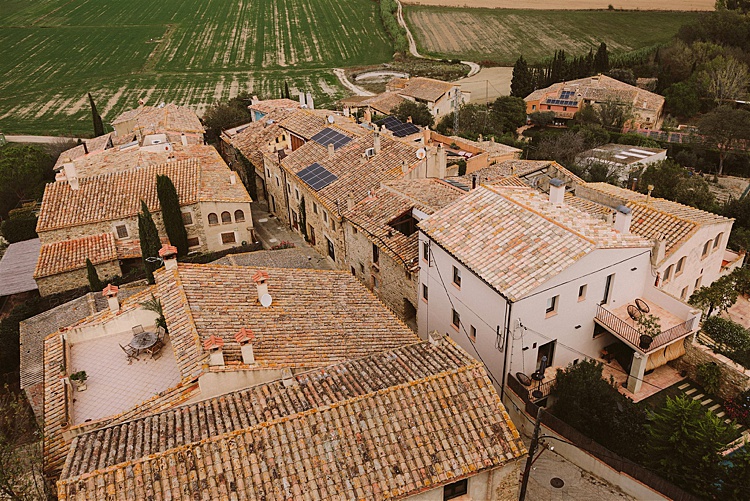
Talia and Nadav‘s Jewish Wedding in Spain |  Photo by People True Love Tellers

Plan extra days around your destination wedding 

We, your planning team, always fly in to your destination the day before the first event – this way if there are any issues or delays with flights we don’t get caught out. We’re on the ground, we’re rested, and we’re ready to deliver your celebration of a lifetime. For you as the hosts, we recommend arriving even sooner than that.

As your guests start to arrive, it’s nice if you are already settled and able to greet them. We also suggest you don’t fly home immediately the morning after your wedding, even if you’re not hosting a post-wedding event. The day after should be reserved for reveling in all the fabulous memories and saying goodbye to your loved ones, not hurriedly packing your suitcase and checking out of your room (possibly with a hangover!)

Aviva and Alan, Villa di Maiano, Fiesole, Italy

Aviva and Alan‘s Jewish Wedding in Tuscany | Photo by David Bastianoni 

One place you shouldn’t scrimp if your budget starts to run low… 

If you’re looking to cut something to save some money, arguably the worst place you can do this is by deciding not to provide transport to and from your wedding. We’ve already touched on the importance of looking after your guests, and this is especially important if your venue is in a difficult location where there is no Uber or local taxi service readily available. Even if there is a local taxi service, you’re probably looking at upwards of 100 people trying to hail the same 5 taxis in a small rural town…

Chhaya and Harry, ME Sitges Terramar Hotel, Barcelona, Spain

Chhaya and Harry‘s Hindu-Jewish Wedding in Spain | Photo by Dmitry Komarenko

And one cost-saving tip 

If you are looking for somewhere to save money, many couples like to give a favour or welcome gift. Rather than buying overpriced trinkets, spending an unreasonable amount on jars of local olives or working with a stationer to produce a welcome guide, by far the most appreciated gifts are handwritten notes.

I know it’s a big job, but we’ve seen it time and time again – guests love them, and it really shows how grateful you are that they made the effort to come to your wedding.

Katie and Tom‘s Jewish Wedding in Spain | Photo by Violeta Minnick 

The question of guest hotels – who pays?

Couples often ask us whether they are obligated to pay for their guests’ accommodation. The reality is that the vast majority of our wedding couples don’t. It is therefore important to choose a venue that either has rooms on site that are affordable for all guests (or you can do some subsidising if not), or you choose multiple hotels in the area for guests that range from more basic budget options up to five star luxury. Our travel concierge service is built to help you with this, as well as to negotiate discounted group rates and secure blocks of rooms.

Some couples are able to cover their guests’ accommodation, and of course this is a very, very nice gesture. If you do go this way, you need to make sure you get a solid commitment first. You might find that if guests have not paid for a room, they feel less like they have to show up to your wedding. In this case you could charge a nominal amount for the room, or ask for guests’ flight details so you have evidence they’re committed.

Aviva and Alan, Villa di Maiano, Fiesole, Italy

Aviva and Alan‘s Jewish Wedding in Tuscany | Photo by David Bastianoni 

It’s easier to do your legal wedding at home before you travel 

Most of our couples choose to do a civil ceremony in their home country before going overseas for their destination wedding. The ceremony we do in your chosen country is then symbolic, whether that’s a Jewish wedding ceremony or a non-religious, celebrant-led one. To your guests, it doesn’t look any different – the only difference is that your paperwork is formalised in the UK before flying out.

Of course legal weddings can be done overseas, but it is a complicated process. It can cost thousands, and require solicitors and translators. My professional opinion is that it’s just not necessary, when you can do a simple civil wedding at home, host a small lunch or dinner for 10-20 of your closest friends and family, and start off your wedding celebrations in a lovely, intimate way.
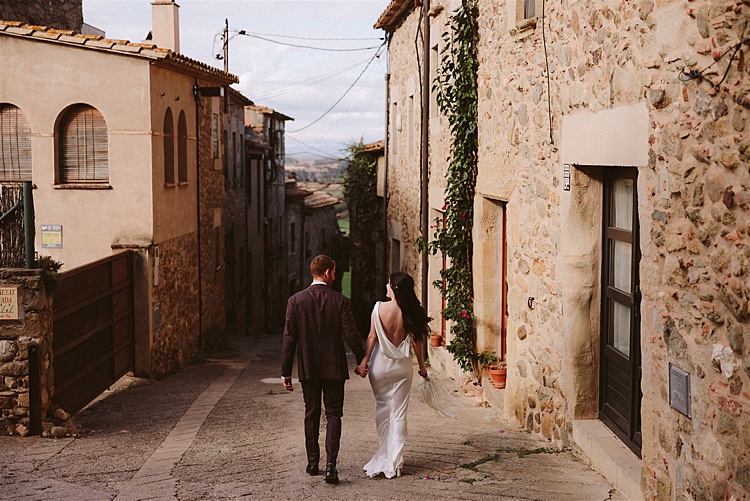
Talia and Nadav‘s Jewish Wedding in Spain |  Photo by People True Love Tellers

I am often asked, with all of this in mind, which day couples should then celebrate their anniversary. My answer is this: when you were born and your parents went to the registry office to register your birth, they will have done so any time in the weeks following. It doesn’t have to be done on the day you are actually born. This doesn’t mean you celebrate your birthday on the day that your birth certificate is issued and dated – you celebrate on the day you were born!

Therefore, I recommend celebrating your wedding anniversary on the date that we host your destination wedding.

Natasha-and-Marc-Villa-Orlando-Torre-del-Lago-in-Tuscany-Italy

Natasha and Marc‘s Jewish Wedding in Tuscany | Photo by James Mason 

Don’t underestimate the amount of work involved in pulling off a destination wedding 

Planning a destination wedding is a wonderful experience, celebrating one even more so. But it’s important not to underestimate just how much work goes into making it look put-together, considered and effortless. Even more so than if you’re marrying at home, we recommend working with a wedding planner for an overseas wedding.

Aviva and Alan, Villa di Maiano, Fiesole, Italy

Aviva and Alan‘s Jewish Wedding in Tuscany | Photo by David Bastianoni 

GET IN TOUCH if you’d like to talk to us about planning your destination wedding in Mediterranean Europe.

Share this post:

  • Share on Facebook (Opens in new window) Facebook
  • Share on X (Opens in new window) X
  • Share on Reddit (Opens in new window) Reddit
  • Share on Threads (Opens in new window) Threads
  • Share on Pinterest (Opens in new window) Pinterest

Breaking the Mold: How Jewish Wedding Photography Has Gone from Classic to Cutting-Edge

12/03/2025 by Karen Cinnamon

This is a guest post by award-winning wedding photographer Claudine Hartzel. Based in London, Claudine has photographed tons of gorgeous Smashing The Glass weddings over the years, and the fact that she’s Jewish herself means she’s got special insight into all the things that make a Jewish wedding so special. With 15 years’ experience capturing Jewish weddings, no one’s got a better read of how Jewish wedding photography has evolved in recent years – and that’s exactly what she’s chatting about with us today. 


Focus on Authenticity and Emotion

Then: Jewish wedding photography used to emphasize formal group portraits and documentary-style images, capturing every table and guest. The lighting was often poor, and the images could feel stiff, lacking the warmth and personality of the event itself.

Now: There’s a major shift towards candid, authentic storytelling. Today’s couples want their wedding captured as a true love story – complete with raw, emotional moments that could easily grace the pages of a high-end magazine or Instagram feed. While family and group photos are still important, the focus has shifted to the in-between moments, where emotions are at their purest. These real, fleeting connections between family members and guests are often the most treasured memories. I will also bring a second photographer to capture the rooms shots, back shots and reception so I’m not taken away from the main events.


Blending Tradition with Modernity

Then: Jewish wedding photography was often highly traditional, focusing on ceremonial moments like capturing every part of the hora, and ensuring formal group shots were meticulously documented. The emphasis was on structure rather than creativity.

Now: Couples want to honour tradition while still expressing their personalities. Formal photographs are still expected, but they are fewer, more relaxed, and feel natural. When I capture moments in between the formals, it adds an expressive, authentic touch. Couples can opt to take their formal portraits before the ceremony rather than after, more in line with the Israeli style, allowing them to be fully present at their reception. Timings can be adjusted to suit their vision, not taking them away from the day. The goal is to document real emotions in a way that feels timeless, avoiding overly stylized or dated trends. And of course, a beautifully composed formal portrait always stands the test of time.


Finding the Right Balance

Then: Parents often took the reins in planning the wedding, booking vendors and managing the timeline, which sometimes left the couple with little say in their own day.

Now: The best weddings happen when couples and parents collaborate. Today’s couples take an active role in shaping their celebration, but they still involve their families in meaningful ways, whether by seeking input on traditions or guest lists. As a photographer, I facilitate this harmony by ensuring everyone’s on the same page when it comes to the timeline and key moments. Clear communication is key, and I always meet with both the couple and their parents to iron out the details—whether it’s when to capture the first look or when to help the bride into her dress. The result is a celebration that’s true to both the couple and their families.


Continue ReadingContinue Reading

Share this post:

  • Share on Facebook (Opens in new window) Facebook
  • Share on X (Opens in new window) X
  • Share on Reddit (Opens in new window) Reddit
  • Share on Threads (Opens in new window) Threads
  • Share on Pinterest (Opens in new window) Pinterest

Get Ready for London’s Dreamiest Hanukkah Pop-up

06/12/2024 by Karen Cinnamon

This is a guest post by Danya Kay, founder of Contemporary Judaica – my very favourite source for stylish, modern Judaica in the UK. 


This year has whizzed by, and the recent cold spell has ensured the winter festivities of spreading joy and light feel more real now, and on top of that, because Hanukkah is so much later this year, the build-up is even more exciting.

Find Jonathan Adler at Contemporary Judaica 

It’s a cosy feeling of colour, family and smells of fried latkes, but also, we can’t help but think of those unable to enjoy it with us—we can’t forget and for that reason the importance of spreading even more joy and light at this time, is more significant than ever.

Find Chewdaica at Contemporary Judaica 

At Contemporary Judaica, we’re thrilled to do our part by reopening the doors of our Hanukkah pop-up this December 10—15 in the charming village of Hampstead. Nestled between Roni’s Bakery and Ottolenghi, and just moments from Hampstead Heath, our pop-up shop will once again showcase an exquisite selection of Judaica from talented artists around the globe.

Arch Chanukiah by Steven Bronstein

A Celebration of Style and Tradition

Our pop-up shop offers a unique opportunity to browse our curated collection of functional yet beautiful Judaica designed to be cherished all year round—not just during the holidays—featuring designers like Jonathan Adler, Michael Aram, Tchotchke, L’Objet, and more. 

Chai Necklace in Silver by Shlomit Ofir

This is our third year of popping up in Hampstead—times have changed and, from a personal standpoint, the way artists, customers, friends, and acquaintances have rallied together to stand up, support one another and connect with their Judaism more deeply than ever is the most wonderful and positive feeling to be had in 15 years of running Contemporary Judaica.

Rova Chanukiah by L’Objet

It feels more like being part of an extended family—making connections and spreading joy through the process of selecting beautiful Judaica and seeing the Jewish joy it brings.  Whether you’re treating yourself, selecting a meaningful gift for a loved one, or honoring a significant milestone—like choosing a tallit for your child or transforming a smashed chuppah glass into a treasured keepsake—each piece tells a story of joy and connection.

Heart Dreidal by Michael Aram

The unique experience of the pop-ups to date has been special–friends randomly meeting, people popping by and stories told.  Come and see for yourself!

‘Ripples’ Marbles Concrete Chanukiah by Logifaces

If you’re thinking of creating a bespoke online Judaica Wedding List [note from Karen: I highly recommend doing this to ensure the Judaica gifts you receive match your taste and style!], this is a great opportunity to pick your favourite pieces out in person!

Continue ReadingContinue Reading

Share this post:

  • Share on Facebook (Opens in new window) Facebook
  • Share on X (Opens in new window) X
  • Share on Reddit (Opens in new window) Reddit
  • Share on Threads (Opens in new window) Threads
  • Share on Pinterest (Opens in new window) Pinterest

Love Knows No Boundaries: Navigating Interfaith Jewish Wedding Celebrations

19/06/2024 by Karen Cinnamon

Styled by La Fête |Photo by Divine Day Photography

This is a guest post by Charlotte Ricard-Quesada, Founder & Creative Director of La Fête. She is passionate about helping her couples craft meaningful Jewish and interfaith Jewish weddings in the UK, Italy, France, Spain, and beyond. Today she’s channeling her wisdom into some great tips about how to plan a beautiful celebration that honors both of your backgrounds. Even if you and your partner are both Jewish, if you come from different cultural or international backgrounds lots of these tips will be relevant – so read on!


Love is a universal language, transcending borders, cultures, and religions. In an increasingly interconnected world, interfaith marriages are becoming more common, celebrating the beauty of diversity and the unity of love. While navigating these celebrations can be intricate, the result is a unique and deeply meaningful ceremony that honours both partners’ backgrounds. Here, we explore how to plan and execute an interfaith Jewish wedding that respects and celebrates the traditions of both partners.

Susie-Axel-Pavillon-Dauphine-Paris-France

Susie and Axel’s Jewish wedding, planned by La Fête |Photo by Dream Prod

Embracing Dual Heritage

The key to a successful celebration lies in understanding and respecting both traditions. This journey begins with open and honest conversations between the couple and their families. Discussing each person’s expectations, non-negotiables, and the elements they hold dear ensures that both faiths are represented and honoured. In many scenarios that I have dealt with, couples and families need to be as clear as possible from the start about their way of living their religion, and the rituals or traditions that are important for each one. Some families have a more paired-back vision of religious practice and this needs to be considered, without affecting the other party.

Rebecca & Emmanuel, Villa Luisa, Seville, Spain

Rebecca and Emmanuel’s Jewish wedding, planned by La Fête |Photo by Juan Luis Morilla

Finding Common Ground

The beauty of any wedding lies in finding common ground and creating a ceremony that reflects the couple’s unique love story. Start by identifying shared values and themes that resonate with both traditions. For example, the importance of family, love, and community are universal concepts that can be beautifully woven into the wedding ceremony.

Rebecca & Emmanuel, Villa Luisa, Seville, Spain

Rebecca and Emmanuel’s Jewish wedding, planned by La Fête |Photo by Juan Luis Morilla

Seeking Guidance

Consulting with clergy from both faiths can provide invaluable insights and help in blending the ceremonies seamlessly. Many rabbis and religious leaders have experience with interfaith weddings and can offer guidance on how to incorporate elements from both traditions respectfully. This collaborative approach not only enriches the ceremony but also provides a deeper understanding of each other’s faiths. Many times, when it has been interfaith weddings, I have had a rabbi and priest, or a rabbi and a vicar for example creating this beautifully unique ceremony.

Rebecca & Emmanuel, Villa Luisa, Seville, Spain

Rebecca and Emmanuel’s Jewish wedding, planned by La Fête |Photo by Juan Luis Morilla

The Chuppah

A central element in a Jewish wedding, the chuppah represents the couple’s future home, open to guests and family. Including a chuppah in an interfaith ceremony is a beautiful way to honour Jewish tradition. Personalise the chuppah with meaningful decorations, such as family heirlooms or symbols from both faiths, to represent the union of two cultures.

Continue ReadingContinue Reading

Share this post:

  • Share on Facebook (Opens in new window) Facebook
  • Share on X (Opens in new window) X
  • Share on Reddit (Opens in new window) Reddit
  • Share on Threads (Opens in new window) Threads
  • Share on Pinterest (Opens in new window) Pinterest

Navigating the Digital Wedding Invitation Landscape: A Jewish Perspective

27/09/2023 by Karen Cinnamon

This is a guest post by Aimee Lyons, founder of Oy Vey Studio. A graphic designer with over a decade of experience creating bespoke stationery, she absolutely loves helping individuals bring their creativity to life through the art of stationery, especially when it comes to making those big events truly memorable.


In the ever-evolving digital age, even longstanding traditions like Jewish weddings are adapting to the digital realm. Today, couples often grapple with the decision of whether to embrace digital wedding invitations or stick to the classic paper ones.

Let’s delve into the pros and cons of digital wedding invitations from a Jewish perspective to help you make an informed choice for your special day.

Pros of Digital Wedding Invitations

1. Eco-Consciousness: Adhering to the Jewish value of “bal tashchit” (do not destroy), digital invitations align with the Jewish commitment to environmental stewardship. By forgoing paper, printing, and shipping, you contribute to a more sustainable world.

A sustainable paper solution could be something like seeded paper. Image from Etsy.

2. Financial Prudence: Traditional paper invitations can incur significant expenses, including design, printing, and postage costs. Digital invitations often present a more budget-friendly alternative, allowing you to allocate resources to other meaningful aspects of your Jewish wedding.

3. Effortless Sending: Digital invitations can be swiftly sent to your guests’ email addresses or via messaging apps, saving valuable time and effort in the invitation distribution process. Electronic RSVPs also simplify tracking guest responses.

4. Interactive Potential: Embracing digital invitations offers creative opportunities. You can include multimedia elements like videos, music, and links to your wedding website, thereby enhancing your guests’ engagement and anticipation. Some platforms even have digital wax seals…

Magen David wax seal feature on Greenvelope.com

5. Real-Time Updates: In the dynamic world of event planning, last-minute changes to wedding details may occur. Digital platforms mean changes can be easily disseminated to all your guests, ensuring everyone stays informed.

6. Global Outreach: Us Jews are spread far and wide across the globe. With digital invitations, you can effortlessly invite Jewish relatives and friends from every corner, transcending geographical barriers and minimising international postage concerns.

Continue ReadingContinue Reading

Share this post:

  • Share on Facebook (Opens in new window) Facebook
  • Share on X (Opens in new window) X
  • Share on Reddit (Opens in new window) Reddit
  • Share on Threads (Opens in new window) Threads
  • Share on Pinterest (Opens in new window) Pinterest
  • 1
  • 2
  • 3
  • …
  • 8
  • Next Page »

Jewish Weddings by Country

Weddings by Colour

Awesome Jewish Gifts

Get posts directly into your inbox

Enter your email address below and get the latest posts delivered straight to your inbox.

Today’s Top Posts

  • A guide to the Jewish Wedding Ceremony and Order of Service under the chuppah
    A guide to the Jewish Wedding Ceremony and Order of Service under the chuppah
  • Jewish Wedding Traditions Explained - Breaking The Glass
    Jewish Wedding Traditions Explained - Breaking The Glass
  • Dates in 2026, 2027 and 2028 to avoid for a Jewish wedding plus a 12 Month Wedding Planning Monthly Checklist
    Dates in 2026, 2027 and 2028 to avoid for a Jewish wedding plus a 12 Month Wedding Planning Monthly Checklist
  • How to Turn Your Smashed Glass Shards Into a Keepsake Souvenir of Your Jewish Wedding
    How to Turn Your Smashed Glass Shards Into a Keepsake Souvenir of Your Jewish Wedding
  • A Fairytale Jewish Wedding at Castello Bevilacqua, Verona, Italy
    A Fairytale Jewish Wedding at Castello Bevilacqua, Verona, Italy

Subscribe by Email

Enter your email address below and get the latest posts delivered straight to your inbox.

Monica Vinader
Liberty London
Mr And Mrs Smith Honeymoons
Kate Spade UK Limited
closeJoin our members-only community for Jewish brides!

All content © Smashing The Glass 2026