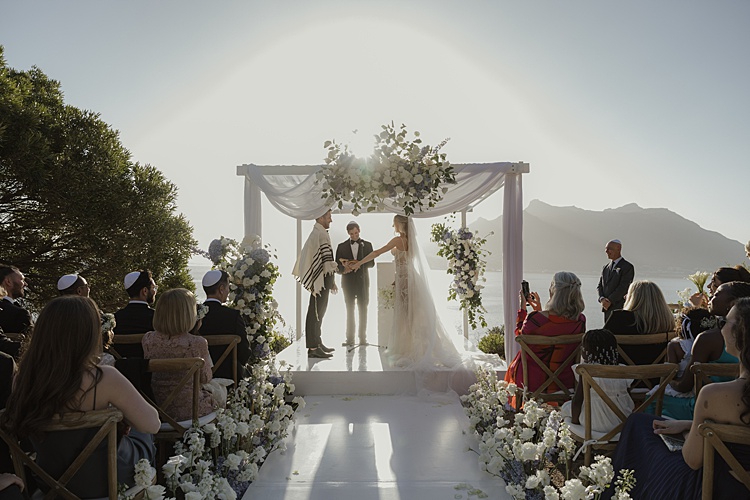
Camila and Ben‘s Jewish wedding | Photo by Nikki van Diermen
One of the most beautiful things about Jewish weddings is how rich they are in ritual. There’s so much meaning and so many centuries of tradition behind just about every step of the day, and there’s something so special about that.
There’s no denying, though, that there’s a lot of lingo to wrap your head around if you’re new to the Jewish wedding world (or even if you’re not!).
That’s why we created our ultimate Jewish wedding glossary. Whether you’re planning your own Jewish wedding or attending your first one as a guest, we’ll take you from aufruf to yichud in no time flat.

Sophie and Jonny‘s Jewish wedding | Photo by Liam Collard Photography
AUFRUF: A short ceremony during the Shabbat synagogue service that normally takes place on the Saturday morning before the wedding. The groom (and sometimes the bride) are honoured in front of their community. This is often followed by a small party or lunch.
ARAMAIC: A semitic language related to Hebrew. The traditional ketubah text is in Aramaic.
ASHKENAZI: Jews of Eastern and Central European descent.
BADEKEN: A short but meaningful ceremony where the groom covers the bride’s face with her veil. It occurs just before the actual wedding ceremony and is a custom that derives from the biblical account of Jacob’s first marriage, when he was deceived into marrying the heavily veiled Leah instead of Rachel, his intended bride. The badeken is often emotionally charged as the bride and groom may not have seen each other for 24 hours or longer (as much as 7 days) until this moment.

Jade and Adam‘s badeken | Photo by Milda Vasile Photography
BENCHERS / BENCHING: A small booklet containing the Jewish blessings for a meal. Couples will often make personalized benchers for all of their guests to use and then take home as a souvenir.


