
Are you planning an interfaith Jewish wedding? If so, you might be thinking about how to find the right balance between honoring the Jewish rituals that matter to you while making sure every guest, regardless of background, feels welcomed and included in the day.
We sat down with interfaith and multicultural wedding expert Charlotte Ricard-Quesada, founder of La Fête, for a discussion about thoughtful ways to honour Jewish tradition while creating a ceremony that feels inclusive, warm, and genuinely reflective of both partners.
The founder and creative director of luxury wedding planner La Fête, Charlotte followed her dream and created her own events company in 2016, following a career in luxury fashion. She’s become one of London’s most sought-after wedding designers and event planners, and is the recipient of several industry accolades, including Best Wedding Planner at the BrideLux UK Awards 2022.
Charlotte’s multicultural background and fluency in four languages make her a go-to for couples planning interfaith and multicultural weddings, and she has such a wealth of experience to draw on. If you’re planning an interfaith Jewish wedding yourself, this one is truly a must-read.
Explain Jewish Rituals with a Ceremony Program
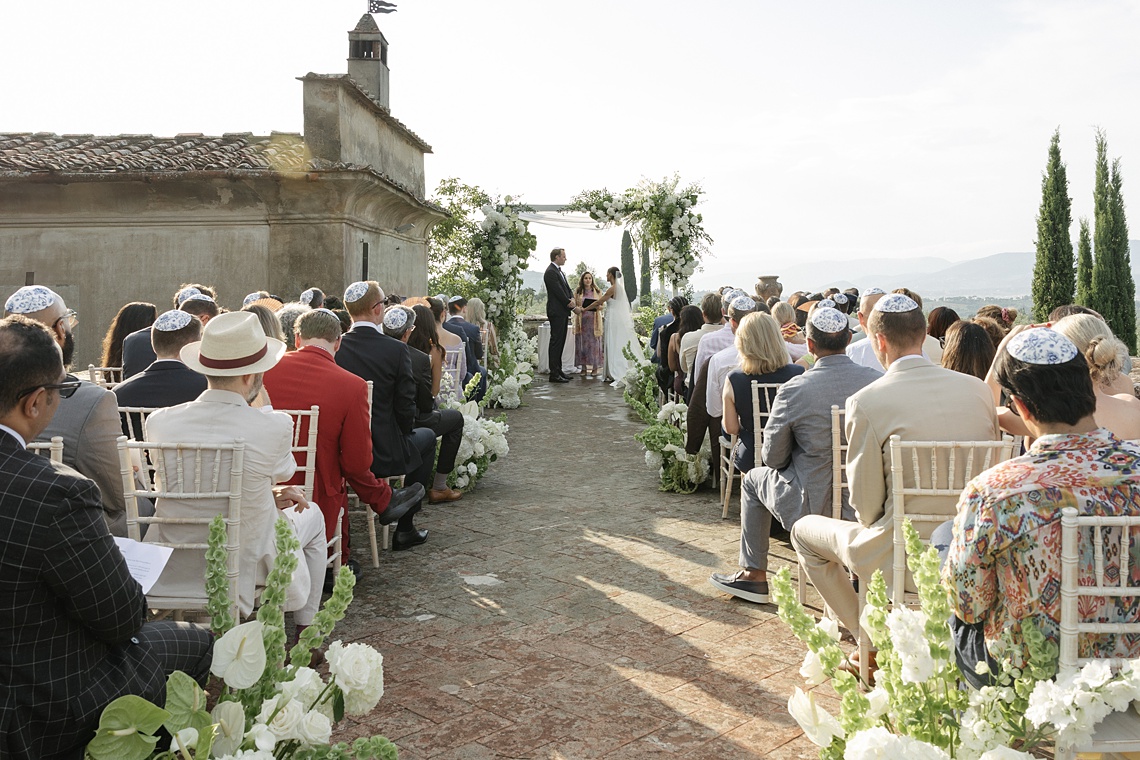
One of the simplest and most powerful ways to include everyone is to explain what’s happening in a wedding program that outlines the ceremony and explains the various Jewish traditions that are part of the day. There are lots of symbols that can be confusing to the uninitiated, from the chuppah to the ketubah to smashing the glass, and making sure all of your guests are kept in the loop is key to creating a relaxed, welcoming atmosphere for family and friends of all backgrounds.

Charlotte recently planned an interfaith wedding where the Jewish bride wanted all relevant symbolism explained, in simple terms, in the wedding program – and she shares that it made such a difference in terms of allowing the attendees to feel fully part of each ritual component of the ceremony.

Invite the Non-Jewish Partner to Participate in Ritual Setups
When both partners are physically part of the ritual preparation, it sends a powerful message of unity. Inviting the non-Jewish partner to take part in setting up ritual elements, such as arranging the ketubah signing table or setting up the chuppah poles, sends a subtle but powerful message. These moments show that Jewish rituals are not about religious exclusivity, but about the shared relationship and life the couple is building together. When both partners are visibly involved, the rituals naturally feel more unified and personal.

Use Inclusive Language in the Ketubah
Many interfaith couples choose modern or humanistic ketubah texts that focus on love, equality, and partnership instead of traditional legal language. This ensures the ketubah is meaningful for both partners, as does including translations or bilingual elements. Many ketubah artists offer a range of text options, including ones written with interfaith couples in mind – and some couples will even opt to write their own personalized ketubah text, speaking specifically to their relationship.

Choose Music that Blends Traditions
Music is one of the most emotionally accessible elements of a ceremony, and weaving traditions together in sound is a powerful way to express a symbolic fusion of cultures and ensure both families feel represented. For example, one processional might be accompanied by a Jewish melody while another uses a song from the non-Jewish partner’s background.
One of Charlotte’s couples recently asked a klezmer band to do mash-ups of traditional klezmer music with more contemporary tunes, and she reports that the resulting performance was amazing and unique.

Have the Officiant Frame Rituals in Universal Terms
A rabbi or celebrant can explain Jewish rituals in ways that resonate beyond religion. For example, the chuppah can be described as a symbol of home, warmth, and protection, which resonates universally. This makes rituals feel accessible to all guests, regardless of background, and allows everyone to connect emotionally, regardless of background.

Adapt the Seven Blessings with Modern or Cultural Readings
Many interfaith couples choose alternative versions of the Seven Blessings, inviting friends and family to read poems or quotes, or to offer personalized wishes focused on love and community. This lets more people participate in the ceremony – regardless of background – and helps set an inclusive, modern tone for the day.

Include Family Members from Both Sides in Ritual Roles
Inviting non-Jewish parents or relatives to hold the chuppah poles or sign the ketubah is a beautiful way to actively include both families and create emotional connection across traditions.

Pair Rituals Across Traditions
Some couples opt to intentionally balance rituals, with a Jewish tradition paralleled by one from the non-Jewish partner’s heritage. For example, Charlotte reports that she’s had couples follow the breaking of the glass with handfasting or candle lighting. This balances traditions and helps guests understand that both heritages are valued.

Consider a Co-Officiated Ceremony
Having two officiants – perhaps a rabbi alongside a secular celebrant or beloved friend – can beautifully model harmony between traditions.

Interpret the Breaking of the Glass Inclusively
Many couples frame the smashing of the glass in universal terms by speaking about it as a reminder of life’s fragility, a symbol of shared responsibility, or a collective moment of joy that lets all guests participate (the communal “Mazal tov!”).This helps remove any pressure around religious meaning while keeping the emotional impact.

Create a Mixed Ritual Table at the Reception
Displaying Jewish ritual items like the kiddush cup alongside cultural objects from the other partner’s background acts as a conversation starter and helps highlight the beauty of blending families.

Make Hebrew Elements Friendly and Familiar
Consider using short blessings, clear transliterations, or even sing-along moments where guests can participate without prior knowledge. This lowers the barriers and keeps the ceremony light and approachable. When guests feel included, they engage more fully – and that’s when rituals truly come alive.
For couples planning an interfaith Jewish wedding, the goal isn’t to dilute tradition, but to translate it – to allow rituals to speak clearly, warmly, and meaningfully to everyone present. With thoughtful framing and a few creative choices, Jewish rituals can become some of the most emotionally resonant moments of an interfaith celebration.

Get in Touch with La Fête
Website | Email | Instagram
Based in London, UK, and traveling worldwide
All photos by Silvia Poropat

Leave a Reply